Leverage and Margin Explained: You’ve likely seen the enticing ads: “Trade with 1:500 leverage!” or “Turn a small deposit into significant market exposure!” While this sounds powerful, it’s crucial to understand the mechanics and monumental risks behind these claims.
Leverage is arguably the most powerful—and dangerous—tool in a trader’s arsenal. Used wisely, it can amplify gains from small price movements. Used recklessly, it can wipe out your entire account in the blink of an eye.
This guide will demystify leverage and margin, showing you exactly how they work as both a powerful weapon and a potential trap.

What is Leverage? Borrowed Power for Trading
In simple terms, leverage is using borrowed capital to increase your potential return on an investment. In trading, this “loan” is provided by your broker.
It’s expressed as a ratio, such as 1:50, 1:100, or 1:500.
- 1:50 Leverage means for every $1 of your own capital, you can control $50 in the market.
- 1:100 Leverage means for every $1, you control $100.
- 1:500 Leverage means for every $1, you control $500.
Think of it like a down payment on a house. You don’t need the full price to control the asset; you only need a fraction of the total value.
What is Margin? The “Good Faith Deposit”
Margin is the amount of your own money that you need to put up to open and maintain a leveraged position. It’s your stake in the trade, or your “good faith deposit.”
- If leverage is the power (1:100),
- Then margin is the cost of using that power.
The key relationship: Margin and Leverage are two sides of the same coin.
- 1:100 Leverage = 1% Margin Requirement
- 1:50 Leverage = 2% Margin Requirement
- 1:10 Leverage = 10% Margin Requirement
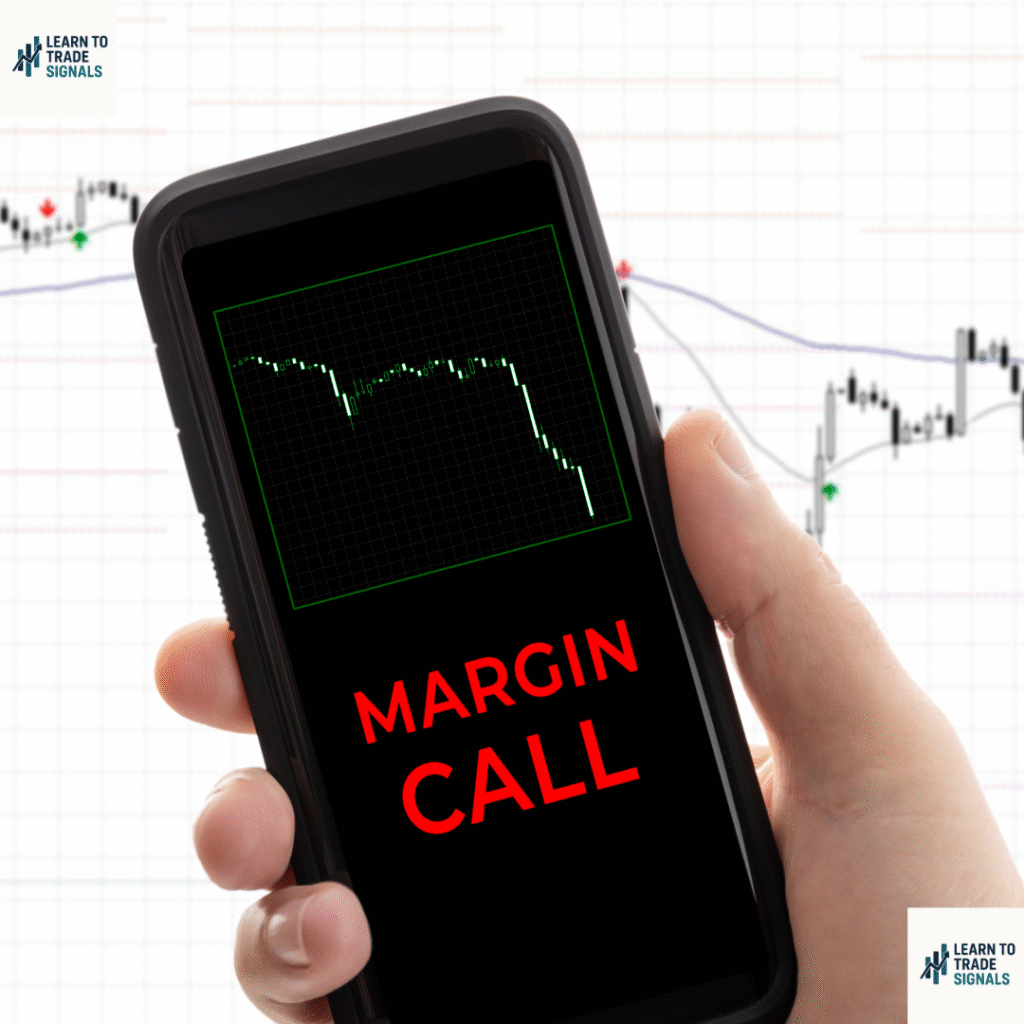
Your “Margin Level” is a key metric on your trading platform that shows the health of your account. If your losses eat into your required margin too much, you will face a Margin Call.

Leverage and Margin:The Double-Edged Sword: A Powerful Example
Let’s make this concrete with an example. Imagine you have $1,000 in your trading account.
Scenario: Trading EUR/USD without Leverage
- You buy 1,000 units of EUR/USD (a micro lot).
- The price moves 1% in your favor.
- Your Profit: $10 (1% of $1,000).
Now, let’s introduce 1:100 Leverage.
Scenario: Trading EUR/USD WITH 1:100 Leverage
- With $1,000, you can now control $100,000.
- You buy 100,000 units (one standard lot).
- The price moves 1% in your favor.
- Your Profit: $1,000 (1% of $100,000).
- You’ve just doubled your account with a 1% move.
This is the beautiful, alluring edge of the sword. But now, let’s look at the other side.
Scenario: The Market Moves AGAINST You
- With $1,000 and 1:100 leverage, you still control $100,000.
- The price moves 1% against you.
- Your Loss: $1,000.
- You’ve just lost your entire account with a 1% move.
This is the sharp, dangerous edge. A move that would be a minor setback without leverage becomes catastrophic with it.
The Dangers You MUST Understand
- Margin Calls and Stop-Outs: If your losses consume most of your available margin, your broker will issue a Margin Call, demanding you add more funds. If you don’t, they will automatically close your positions at a loss (a “Stop-Out”) to protect themselves from further loss.
- Amplified Volatility: Normal market “noise” can cause significant losses in a leveraged account. A small move against you can trigger a stop-loss much more easily.
- Psychological Pressure: The fear of a margin call can lead to poor decision-making, like moving stop-losses or closing winning trades too early.
How to Wield the Sword Safely: 5 Rules for Risk Management
Leverage isn’t inherently evil—it’s a tool. The problem is misuse. Here’s how to manage it:
- Use Lower Leverage Than You’re Offered: Just because your broker offers 1:500 doesn’t mean you should use it. Professional traders rarely use maximum leverage. Start with 1:10 or 1:20.
- Use a Stop-Loss on EVERY Trade: This is non-negotiable. A stop-loss automatically closes your trade at a predetermined price, capping your potential loss.
- Risk a Small Percentage of Your Account: Never risk more than 1-2% of your account balance on a single trade. This ensures you can survive a string of losses.
- Calculate Your Position Size: Before you enter a trade, calculate the exact lot size that keeps your risk within your 1-2% limit, based on your stop-loss distance.
- Understand the Margin Requirements: Always know how much margin a new trade will use and ensure your account equity is well above the minimum requirement.
FAQ: Leverage and Margin
Q: What is a good leverage ratio for beginners?
A: For beginners, we strongly recommend starting with no more than 1:10 or 1:20 leverage. This allows you to learn how leverage works without taking on extreme risk.
Q: Can I lose more money than I have in my account?
A: With a reputable, regulated broker, you should have Negative Balance Protection. This means you cannot lose more than your account balance. However, this is not a guarantee with all brokers, especially unregulated ones, so always check.
Q: Is high leverage bad?
A: High leverage is not “bad,” but it is extremely high-risk. It significantly increases the probability of a margin call. It is generally unsuitable for retail traders.
*Disclaimer: Between 74-89% of retail investor accounts lose money when trading CFDs or Spread Betting. You should consider whether you understand how Spread Betting or CFDs work and whether you can afford to take the high risk of losing your money. Trading involves substantial risk and is not suitable for every investor. Past performance is not indicative of future results. This content is for educational purposes only and is not investment advice.